When a drain backs up, most homeowners reach for the phone and ask for a drain snake. It makes sense — snaking is the service most people know, and it’s usually the cheapest option on the invoice. But snaking has real limitations, and in many situations, it’s the wrong tool for the job. If your plumber keeps coming back to snake the same drain, there’s a reason the problem isn’t going away.
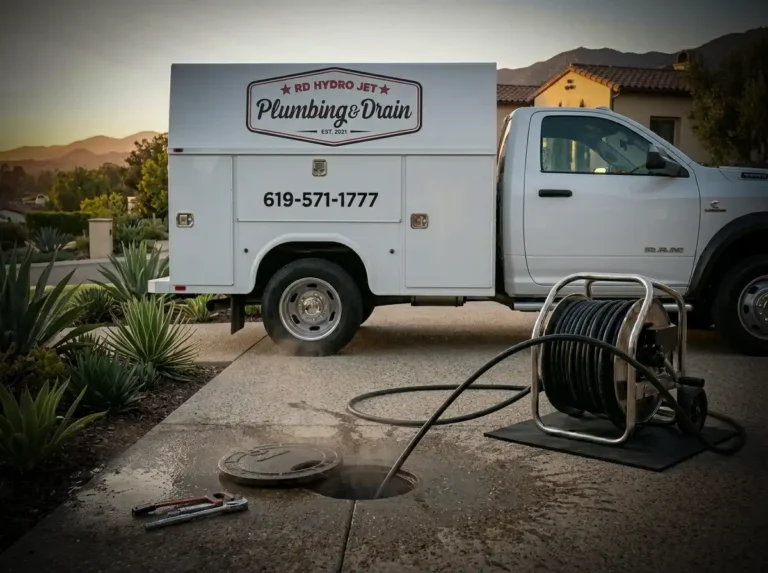
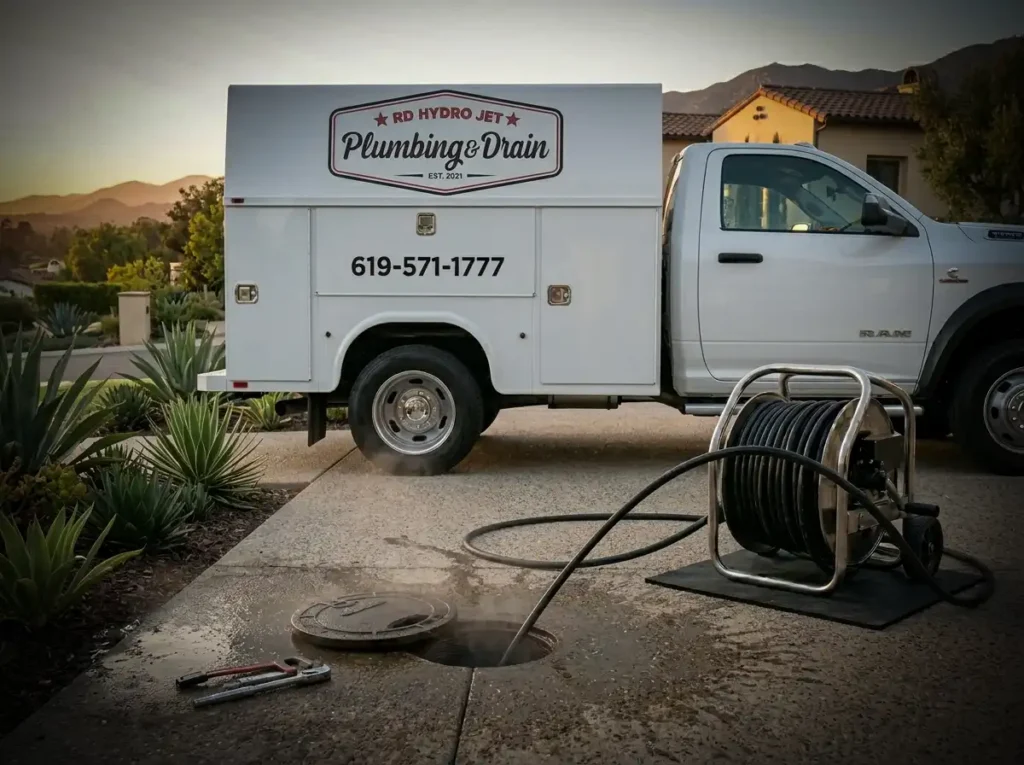
Hydro jetting uses a specialized nozzle that delivers high-pressure water (typically 3,000-4,000 PSI) through your drain and sewer lines. Instead of punching a narrow hole through a clog the way a snake does, hydro jetting scours the entire interior surface of the pipe, removing grease, scale, roots, and debris. Here are five signs that hydro jetting — not another snake call — is what your plumbing actually needs.
1. Your Clogs Keep Coming Back
A drain snake is a metal cable with a cutting head on the end. When your plumber feeds it into a clogged pipe, it bores through the blockage and restores flow. The problem is that it only creates a narrow channel through the clog — it doesn’t clean the pipe wall. Grease, mineral scale, soap scum, and organic buildup remain plastered to the inside of the pipe, and that buildup starts restricting flow again almost immediately.
If you’ve had the same drain snaked two or three times in the past year, the snake is treating the symptom while the underlying problem gets worse. Each time the snake passes through, the remaining buildup continues to accumulate, and the intervals between clogs get shorter. Hydro jetting removes all of it — the full circumference of the pipe interior gets cleaned back to near-original diameter. For most homes, a single hydro jetting service keeps drains flowing freely for 18 to 24 months.
2. Multiple Drains Are Slow at the Same Time
When your kitchen sink, shower, and washing machine all drain slowly at the same time, you don’t have three separate clogs. You have one problem: a blockage or buildup in your main sewer line. Every drain in your house feeds into the main line, so when the main line is restricted, everything upstream slows down.
Snaking a single fixture — the kitchen sink, for example — won’t solve a mainline issue. Even if you snake the main line itself, you’re still only punching a hole through the obstruction. Hydro jetting clears the entire main sewer line from the cleanout at your house to the connection at the street. The high-pressure water flushes debris downstream and out of your system entirely, restoring full flow to every drain in your home.
3. Camera Inspection Shows Buildup on Pipe Walls
At RD Hydrojet, we use sewer camera inspections before recommending any service. The camera shows us — and you — exactly what’s happening inside your pipes. If the camera reveals grease coating the pipe walls, mineral scale narrowing the diameter, or accumulated debris clinging to the interior surface, hydro jetting is the only method that effectively removes it.
A snake slides right past wall buildup without touching it. The cutting head is designed to break through blockages in the center of the pipe, not scrape the walls. So even after a successful snake job, all that wall buildup remains in place, continuing to narrow the pipe and catch new debris. Hydro jetting’s 360-degree spray pattern strips buildup off the pipe walls entirely, which is why a camera inspection often shows a dramatic difference in pipe condition before and after the service.
4. Tree Roots Have Invaded Your Sewer Line
East San Diego County is full of mature trees, and neighborhoods like San Carlos, La Mesa, and El Cajon have extensive root systems that seek out moisture. Tree roots find their way into sewer lines through small cracks and joint separations, especially in older clay and cast iron pipes. Once inside, they grow rapidly — a small root hair can become a dense root mass in a single growing season.
Snaking cuts through roots, but it’s a temporary fix. The snake’s cutting head slices the root mass, restoring flow for a few weeks or months. But the roots are still alive at the entry point, and they regrow quickly. Many homeowners end up on a cycle of root snaking every three to six months, spending hundreds of dollars each time without ever solving the problem.
Hydro jetting doesn’t just cut through roots — it blasts them out of the pipe entirely and flushes the debris downstream. Combined with a root-inhibiting treatment applied to the pipe interior, hydro jetting provides significantly longer-lasting results. Many East County homes built in the 1960s and 70s have clay sewer lines that are especially vulnerable to root intrusion at every joint, making hydro jetting the most effective maintenance strategy.
5. You Smell Sewage or Notice Foul Odors
Persistent sewer smells coming from floor drains, bathroom fixtures, or your yard are more than just unpleasant — they indicate that organic matter is accumulating inside your drain or sewer line. Partial blockages trap waste material, which decomposes and produces hydrogen sulfide gas (the classic rotten egg smell). These odors can also indicate a belly or low spot in the pipe where waste collects and stagnates.
Snaking may temporarily break through a partial blockage, but it won’t remove the organic buildup coating the pipe walls that’s generating the odor. Hydro jetting pressurizes the entire line, stripping away the layer of decomposing organic matter and flushing it out of the system. After hydro jetting, the pipe interior is clean enough that there’s nothing left to produce odor.
What Does Hydro Jetting Cost vs. Repeated Snake Calls?
A single hydro jetting service typically runs between $350 and $800, depending on the line length and access. Standard drain snaking costs $150 to $300 per visit. At first glance, snaking looks like the better deal. But do the math on recurring problems.
If you’re calling for snaking two to three times per year at $200 per visit, you’re spending $400 to $600 annually — and the problem keeps getting worse. A single hydro jetting service every 18 to 24 months costs less over time and actually solves the underlying issue. You also avoid the emergency weekend calls when a chronic clog finally causes a full backup into your home, which can mean water damage, cleanup costs, and a much larger bill.
Start with a Camera Inspection
We always begin with a sewer camera inspection before recommending hydro jetting. The camera shows us the exact condition of your pipes — the type of buildup, the location and severity of blockages, and whether there’s any structural damage that needs to be addressed first. Hydro jetting isn’t the right solution for every situation (for example, pipes with significant structural damage may need repair before jetting), and we won’t recommend a service you don’t need.
The camera inspection takes about 30 minutes, and you watch the footage with us in real time. You’ll see exactly what we see, so there’s no guesswork involved in the recommendation.
Learn more about our hydro jetting service
Drain and sewer repair services
If your drains keep clogging despite repeated snaking, call RD Hydrojet at (619) 571-1777 for a camera inspection. We’ll show you exactly what’s happening inside your pipes and recommend the right fix — no guesswork, no upselling.